Farm Kitchen, March 2015

3.16.2015

Last weekend's Farm Kitchen lunch was the reason we do these things - perfect Autumn weather, lots of tasty seasonal food, a happy bunch of people and plenty of Orange wine to complement all of the above.

We had the below menu (and please forgive my shocking hand-writing, I'd forgotten to do the blackboards and had to scribble them in a hurry as the first guests began to arrive) and our neighbours and friends Justin and Pip Jarrett came over for lunch too with some of their new See Saw Wines to share (their Pinot is my favourite, really delicious and a great price). Thanks as always to my clever friend Pip for coming along to help me cook on the day. We couldn't do it without you or your kitchen chat Pip. Thanks also to my mother-in-law Judith Hansen for letting me raid her amazing garden for foliage to decorate the tables.

Tim took everyone on a bit of a farm tour and then we sat down to a rather long lunch, some not rising from the table again until well into the evening, but that's another story.


And true to form, after the lunch kicked off, I was too busy plating up, clearing etc to take many photos. None were captured of the entree and just a handful thereafter! I did grab one of the main course though, it was a colourful, crunchy Autumnal affair and we were really happy with how it worked out. Recipe follows...

Chargrilled venison with Autumn slaw, quince chutney, spuds and elephant garlic aioli

For the slaw

This is a really beautiful Autumn side-dish and it's also great with slow-cooked pork or lamb and full of flavour and crunch. I use a mandolin to shave the cabbage, apples and fennel nice and finely but a sharp knife would also do the trick. This recipe serves 8 people. The quince chutney recipe can be found here.

1/2 red cabbage, finely shaved
1/2 white cabbage, finely shaved
3 Granny Smith apples, finely sliced
1 fennel bulb, finely sliced (keep the fronds and toss into the salad too)
2 cups rocket
1 bunch mint, leaves picked from stems
1 cup walnut kernels, roasted and roughly chopped
 For the dressing; 1/2 cup buttermilk, 3 tbsp olive oil, 2 tsp wholegrain mustard, Juice of one lemon and salt and pepper to taste.

Combine all ingredients in a large bowl and toss well. Whisk the dressing ingredients together then work through the salad with your fingers. I find this is a pretty 'thirsty' salad so you may need to add more buttermilk.

To cook the venison;

As always we believe that simpler is better with our tender meat, particularly with a prime cut like backstrap. So all we do is rub it with olive oil and season then cook for four minutes on each side on a hot barbecue before resting for 10 minutes under foil and slicing across the grain.

For the spuds

This was my friend and invaluable helper Pip's domain, she scrubbed and washed a mixture of Kipflers, Dutch creams and Kestrel potatoes then par-boiled them before tossing with rosemary and olive oil and roasting at 200 for an hour. Our spuds came freshly dug from Dougal Munro's farm.

For the elephant garlic aioli

Elephant garlic is a fairly new discovery for me and I thank Dougal Munro for the introduction. Dougal grows this variety and much more at his Springside farm and I'm currently working on a post about him which I hope will be ready to go next week. In the meantime, if you can get your hands on elephant garlic for this, please do! The bulbs are huge, as the name suggests and have a gorgeous, mellow flavour that is perfect here. Of course, any smaller (Australian-grown) garlic would be great here too. Makes 1 cup.

3 egg yolks
1/2 tsp sea salt
1 tsp Dijon mustard
1 cup extra virgin olive oil
1 head elephant garlic

Preheat oven to 180C. Rub the garlic with a little olive oil, wrap in foil then place in the oven for one hour. Meanwhile, lay a tea towel on a work surface and place a bowl on top (this will help stop it slipping around while you whisk). Place the yolks, salt and mustard in the bowl and whisk until well combined. Now add the oil in a steady stream, whisking all the time so the mixture thickens up as you go. If it splits, just stop adding oil and give it a really good whisk, things should come back together after a bit. Your arm might be sore but the results will be worth it!

Keep whisking until all the oil is incorporated then transfer to a jar and place this in the fridge while the garlic cooks. After an hour, slice the top off the bulb and squeeze the soft, almost caramelised garlic 'pulp' into a bowl. Let cool then mix into the mayonnaise base, season to taste and return to the fridge until needed.


The highlight of the day for me, apart of course, from our beautiful venison, was the below fig and ricotta tart. I get disproportionately excited when a new recipe works out exactly as I'd hoped and this was one of those times. 

Basically a pretty simple affair; a sweet shortcrust pastry shell blind baked then filled with home-made ricotta and topped with white and black figs then baked again (but not too much, I wanted the ricotta to still be slightly wobbly and silky soft). The result was a perfect combination of flavour and texture (if I don't say so myself).  Here's the recipe, below, and please note, you could swap the figs with any fresh or poached fruit you think might work. 

We served these tarts with a dollop of Little Big Dairy cream (incredible stuff) and a sprinkling of sweet dukkah. 

Fig and ricotta tarts

Makes 2 tarts

1 quantity shortcrust pastry (here's my recipe)
2 cups homemade ricotta (of course you can use store bought ricotta and it will still be a beautiful tart, I just find the homemade version to be looser and more delicious, and truly it's easy to make).
3 free range eggs
1 tsp vanilla paste
3 tbsp caster sugar
Green and black figs, thinly sliced 

Roll out half of the pastry until about 4mm thick then drape over a loose-bottomed tart shell or pie tin. Press into the base and edges and trim. Repeat with the other half of the pastry then place the shells in the fridge to rest for half an hour.

Preheat the oven to 180C. Prick the base of each tart shell with a fork then line with baking paper and fill with baking weights, rice, lentils or similar. Bake for 10 minutes then remove paper and weights and bake for another 10 minutes or until the pastry is turning a light golden colour and looking nice and dry. 

Meanwhile, whisk the ricotta, eggs, vanilla and sugar together until well combined - do this by hand not with an electric mixer as it will make the mixture too dense. Divide among both the blind-baked tart shells then top with sliced figs.

Return tarts to the oven for a further 20 minutes or until the ricotta is just beginning to turn golden and feels a little wobbly. Remove from the oven and serve warm or at room temperature.


If you'd like to join us at our next Farm Kitchen lunch, please jump over here for more information, please note we are in the process of working on some new dates and will update this page with them shortly.


Gold in them hills

1.20.2015


Oh my goodness farming can be a tough gig. Too much rain or not enough (the latter at the moment for us), busted tractor tyres (ouch), busted cash flow, fences to put up, fences to pull down, animals to feed, dollar to watch, paddocks to improve, meat to sell and so it goes, on and on. Honestly the past few weeks have challenged us on most fronts. 

The point of all this is not to whinge, but to say that despite what this blog and my Instagram feed may sometimes imply, it’s not always brioche and picnics here at Mandagery Creek HQ. Sometimes, but not always. And after weeks like this, it takes extra effort to keep our eyes on the prize - which is, collectively, our two healthy kids, each other, our families, the beautiful part of the world we live in and the community we share it with. To remember that while we may not have the funds to renovate or take big holidays etc etc, we can make a nice cake and eat it in the garden for afternoon tea, swap some venison for a bottle or two of wine made by our neighbours, and go on the odd camping trip with friends and cook them an al fresco paella. You know, just enjoy the little things. Which I suppose, aren't really all that little.
 
By the way, if this post were to have a theme song, it'd be Gold In Them Hills by Ron Sexsmith.
 

Anyhoo... my birthday falls just after Christmas so this year I combined the two events in an excuse to buy myself a big paella pan and a tripod with a gas burner (from the lovely ladies at The Essential Ingredient here in Orange). We love picnics and entertaining outside but in summer, with fire bans in place, it’s been hard to cook anything al fresco. Until now...

So last weekend, after a fairly ordinary week, we took my new paella kit on its first proper outing. And it was awesome. While I know that I have a long way to go before my paella’s are perfect or authentic at all, this one really was very tasty and easy to make. Paella is a fantastic way to feed lots of people outside, (unlike risottos, they don’t need lots of stirring so you can just get it going then let it cook) and if camping, the pan comes into its own the next morning as a vehicle for mass bacon and egg frying.

Simple chicken and chorizo paella

I know I'm not inventing the wheel here. But I guess I just wanted to start our paella journey with a classic combination and take it from there. If you are keen on camping - please consider investing in one of the tripod/pan combos pictured above. All told it cost us a little over $200 but I can guarantee that we'll be cooking with this baby for years to come and feeding lots of people in the process so I consider it a good investment.  The recipe below feeds 10. My apologies for not including a photo of the finished dish but by the time we were ready to eat it was pretty dark and not ideal for photography!

1/2 cup olive oil
4 chorizo sausages, sliced into 1cm thick discs
5 garlic cloves, unpeeled, squashed with the flat side of a knife
3 tbsp each finely chopped rosemary and sage
1.5kg chicken thigh fillets, cut into 3cm cubes
1kg tomatoes, grated (discard skins)
3 tbsp smoked paprika
A good pinch (or more if funds allow) of saffron threads
2 litres chicken stock
1kg calasparra rice
2 cups frozen peas

Place your paella pan over high heat and add the olive oil. Cook the chorizo, garlic, herbs and chicken for about five minutes, until browned on the edges but only half cooked. Push everything to the side so you have a circular space in the middle of your pan. Tip in the grated tomatoes and cook for a few minutes until they begin to dry up, don't let them burn.

Combine all ingredients and stir well. Now add the paprika and saffron and stir again. Pour in the stock then sprinkle over the rice. Gently stir so everything is evenly distributed across the pan then, and here's the best part, reduce the heat to medium/low and just leave it to cook for about 10 minutes. Top up the liquid if necessary and after that time check the rice for done-ness. It should be tender with just the slightest crunch. At this point, add the frozen peas, a little more liquid if necessary (you don't want it to be dry at all) and cook for a few more minutes.

Turn off the heat then serve.


Camping bircher muesli

I'm not an experienced camper. But I do love sleeping in the trailer, pictured above, that we borrowed last weekend and hope to one day call our own. We woke to a golden dawn then had a breakfast of bircher muesli, bacon and eggs before heading down to the dam for another day hanging out in and around the water.

Bircher is a brilliant way to start the day; easy, really fulling and I think, absolutely delicious, it's a great camping option as it's happy to sit in the Esky until needed and spooned into bowls. 

1 cup rolled oats
1 green apple, grated
1/2 cup apple juice
3/4 cup natural yogurt
A pinch of ground cinnamon

Combine all of the above ingredients and stir gently. Cover and place in the fridge overnight. The next morning, serve with crushed toasted hazlenuts, blueberries and maple syrup (that's our favourite). Or any other fruit/nut combination you prefer! Raspberries and toasted almonds are delicious too as is a combination of poached fruit and mixed seeds.


Farm Kitchen, December

12.16.2014

Last weekend we hosted our final Farm Kitchen lunch for 2014. As always, our guests were a collective delight and we shared a really fun farm tour and meal together. And as always, the menu was simple and seasonal. Here it is below, with recipes too. Thank you so much to everyone who supported us at the markets and Farm Kitchen this year, we have loved feeding and getting to know you all! Our event calendar for 2015 is almost finished with a new booking system on its way too. This will go live on Monday December 29 and we have some really fantastic events, collaborations and workshops in the pipeline so watch this space!

December 2014 Farm Kitchen Menu

Sweet potato and caramelised onion tarts/
Spiced venison and cherry carpaccio/
Prosciutto-wrapped venison with feta and walnut bean salad, beetroot relish and crispy potatoes/
Squash braised in garlic and tomato/
Brown sugar pavlovas with roasted apricots and apple mint custard/


Sweet potato and caramelised onion tarts

These tarts are a great little appetiser, especially with a chilled glass of bubbles! Makes 8 small tarts (see picture).

1 cup sweet potato, peeled and cut into small cubes
4 tbsp olive oil
2 brown onions, peeled and thinly sliced
1 cup pouring cream
2 eggs
1/4 cup parmesan cheese, finely grated
Salt and pepper to taste
8 small tart shells*(see note)

Preheat oven to 190C. Toss the sweet potato with a tablespoon of the little olive oil and place on a roasting tray, pop this into the oven for 25 minutes or until the potato is cooked through and just beginning to caramelise around the edges.

Meanwhile, heat the remaining olive oil a frying pan over medium-low heat and add the onions. Cook, stirring often, until the onions are completely collapsed and golden brown (this will take about 15 minutes).

Whisk together the cream, egg, cheese and seasoning and set aside. Place the tart shells on a baking tray then divide the roasted sweet potato and caramelised onion up between them. Carefully pour in the cream mixture, filling the tart shells up about 3/4. Bake in preheated oven for 20 minutes or until the tops are golden brown and just firm to touch.

*Note - you can make this extra easy and buy good pre-made shortcrust tart shells or make your own pastry (here’s my recipe).

Spiced venison carpaccio with cherries, horseradish cream and thyme

Possibly my favourite way to serve and share our venison, this simple carpaccio is just beautiful. You could swap the fresh cherries with pickled ones or even wedges of ripe figs. On Saturday we served it with a garlic baguette but any crunchy bread would be great too.

400g Mandagery Creek Venison tenderloin or leg piece
1 tbsp pink peppercorns
1 tbsp cumin seeds
1 tbsp coriander seeds
Salt to taste
2 tbsp horseradish cream
1/3 cup creme fraiche
1 cup fresh cherries, pitted and torn in half
1/2 cup shaved pecorino or parmesan cheese
Thyme (to serve)

Combine the spices and salt in a dry frying pan over medium heat. Cook until fragrant and just beginning to pop then crush mixture in a mortar and pestle or spice grinder. Rub this mixture over the tenderloin and set meat aside for a moment.

Heat a tablespoon or two of olive oil in a frying pan over high heat then add the meat and brown on each side for a minute on each side. Let rest under a tent of foil. Then mix the horsedradish cream and creme fraiche together with a squeeze of lemon to taste. Slice the meat thinly and place on a serving plate. Top with the cherries, shaved pecorino, creme fraiche mix and thyme. Beautiful. Serves 4.


Proscuitto-wrapped venison 

As venison is such a tender, lean meat - we think that by far the best way to cook it is quickly and over a high heat. The barbecue is ideal for this. Today we wrapped striploins in prosciutto and rubbed them with olive oil before cooking for five minutes on each side. We then let the meat rest before serving it with the side dishes and relish, recipes below.


 Beetroot and fennel relish

Just perfect with venison, this mellow, sweet relish is also great with barbecued steaks or lamb chops and keeps for ages. Make an extra batch for Christmas and give a few jars away as presents. Just remember to serve this warm or at room temperature - cold chutney is the worst. Makes 4 cups

1.25kg beetroot
2 cups red wine vinegar
2 cups brown sugar
1 red onion, finely chopped
1 green apple, unpeeled, grated
1/2 tsp sea salt
1/2 tsp freshly ground pepper
1 tsp fennel seeds, dry toasted

Place the beetroot, sugar, red wine vinegar, onion, apple, salt, pepper and fennel in a large saucepan over medium and stir well. Bring to the boil and cook for half an hour or until the mixture is lovely and syrupy. Divide between sterilized jars.

Bean salad with walnuts and feta

This is a fantastic salad, and as it can be made entirely in advance and served cool, it’s perfect for big lunches or dinners when you want most of the prep done before the main event. The idea comes from a recipe printed in this month’s Country Style magazine and written by Annie Smithers. Serves 6-8.

3 cups green beans, trimmed
1 cup walnut kernels, roasted and roughly chopped
3 baby cornichons, finely chopped
1 tsp capers, finely chopped
2 tbsp chives, finely chopped
2 tbsp chervil, finely chopped
2 tbsp parsely, finely chopped
Juice of one lemon
4 tbsp olive oil
250g marinated feta, crumbled

Bring a large pot of water to the boil, throw in the beans and cook for three minutes. Drain and rinse in cold water, or better yet, plunge into an ice bath (this will keep their colour and crunch nicely). Set beans aside while you make the dressing. To do this, just mix together the cornichons, capers, herbs lemon juice and olive oil and season to taste (remember the cornichons, capers and feta are all quite salty so you probably won’t need to add any/much salt). Just before serving, mix together the beans, dressing, walnuts and feta and toss to combine.

Garlic and tomato braised squash 

My favourite way to serve this vegetable, which by the way, in our part of the world at least, is super cheap at the moment and really delicious, this is summer in a bowl to me. Great as a side dish, or if you chop the squash and zucchini a little more finely, tossed with fresh pasta. Serve hot or at room temperature. Serves 8 as a side dish.

4 fat cloves of new season Australian garlic
1/4 cup extra virgin olive oil
8 yellow squash, cut into eighths
3 zucchinis, thinly sliced
2 cups of cherry tomatoes, halved
1 tsp finely chopped fresh red chilli
One lemon
One handful of fresh basil leaves

Combine garlic and olive oil in a heavy-based pan over medium-high heat. Cook for a minute or until garlic is just becoming fragrant, add the squash, zucchini and cherry tomatoes and stir well. Cook, stirring often for five minutes or until the squash is soft and cooked through. Remove from heat, stir in a squeeze of lemon, the fresh chilli and top with a handful of fresh basil leaves.

Crispy potato bake with thyme

2kg sebago potatoes, unpeeled
1 bunch thyme leaves
Olive oil
Salt and cracked pepper to taste
 
Preheat oven to 200C and grease one large or two small gratin or roasting tins. Slice the potatoes as thinly as possible (we use a mandolin - carefully!). Arrange in layers in the prepared tin or tins, sprinkling with sea salt and thyme leaves as you go. Drizzle with olive oil then pop in the oven for an hour or until golden and crunchy. Just before serving, drizzle with a little extra oil and season with freshly ground pepper. Serves 8


Brown sugar pavlovas with toffee, roasted apricots and custard

6 egg whites
1/2 cup caster sugar
1/2 cup brown sugar

Preheat oven to 130C and line two baking trays with paper. Whisk the egg whites in an electric mixer until white and frothy. Add the sugar, a little at a time until the mixture is thick and glossy. Whisk for another few minutes then spoon mixture in large rounds onto prepared tray. Place in the oven for 45 minutes then turn oven off and leave in there to cool completely. Store in an airtight container for up to one week.

For the baked apricots

Halve a kilo or so of apricots and remove the kernels. Arrange on a tray and sprinkle with caster sugar and drizzle lightly with verjuice or sweet white wine. Roast until the apricots are completely collapsed and just beginning to caramelise.

For the custard and toffee

3/4 cup caster sugar

For the toffee, pour the sugar into a saucepan over medium high heat. Line a tray with baking paper and scatter it with the almonds. Swirl the sugar around until it melts and turns into a lovely golden syrup. Once all the sugar is dissolved pour over the almonds, swirling until you have a large disc of toffee. Let set and then break into shards.

For the custard, I used this recipe but stopped before churning the custard into ice cream! The apple mint is a gorgeous, fresh addition but you could certainly leave it out. 


The Perthville Pantry

7.06.2014

Hannah Plummer is one of the most inspiring farmers I've ever had the pleasure to meet.

With her husband Cameron, she runs the Perthville Pantry; raising pasture-fed pork and beef and producing fresh produce from their farm just out of Bathurst, NSW. Hannah has very kindly written about how, why and what she and Cameron farm below, and after reading her words (please do!), I know you'll all share my admiration for this awesome woman.


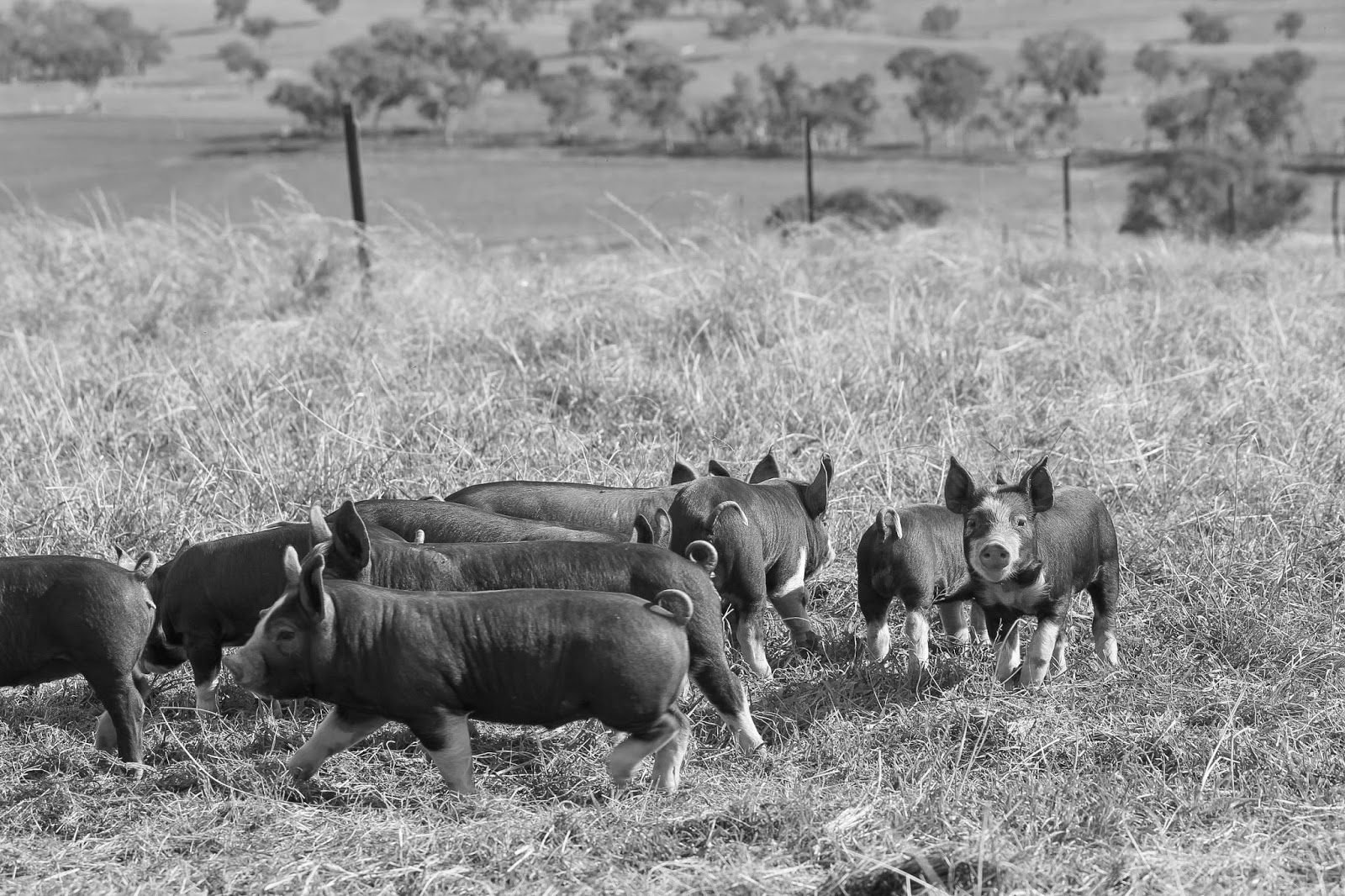
Alice, Tom and I recently spent the best day here in Perthville. We shared the most delicious meal I've had in a long time; (homemade pork sausages slow-cooked in local cider and served with cauliflower mash, recipe below), then Hannah took the kids and I for a walk to meet her beloved pigs. They were in turns; friendly, cheeky, sweet and obviously all as happy as, well... pigs in mud.

Before heading home, Hannah produced a few trays of homemade citrus gummies (recipe below), which my kids, I am ashamed to admit, fell upon like the piglets they'd just been playing with.

I drove away thinking how great would it be if her approach to raising meat - holistic, completely free-range, careful and respectful - could become more the norm. Like us with our deer, she and Cameron farm according to holistic management principles, and their pigs are of course, completely free-frange and completely loved, just as they should be!

You can find Perthville Pantry Products directly through Hannah, from the Bathurst Wholefood Coop and in Orange via The Agrestic Grocer.


Hannah the Farmer

Hannah, can you give us a bit of a background as to how the Perthville Pantry came to be?
Cameron (my husband) and I began to breed pigs as an enterprise so I could work on the farm full time.  We were blown away with how different our genuine ‘pastured’ pork tasted and saw an opportunity to sell our product locally.  We initially teamed up with Craig and Kate Turner who marketed our product through Millthorpe Free Range Farms.  Craig and Kate decided to turn their energy onto other ventures so we created the brand The Perthville Pantry which encompasses our vision for living a healthy, happy and abundant life.

What about your own background, have you always worked in agriculture?
I grew up on my family property where we produced Merino wool and prime lambs.  I studied agriculture in high school and went on to study a Bachelor of Science in Agriculture at the University of Sydney.  Before taking the leap to work full time with my husband, I worked for NSW Farmers’ Association and the Royal Agricultural Society.  My husband has always worked on his family farm producing grass-fed beef.

What are you guys working towards at the Perthville Pantry? What do you dream of it becoming and meaning to you and your customers? 
We want our business to reflect our passions and to create abundance socially and environmentally.  We value practices which promote the regeneration of the landscape and in turn provide nutrient dense produce for our customers.  We want to share what we learn along the way.


You mentioned you have an interest in permaculture and holistic farming, how do you think these two principles can work together on your farm?
I see many parallels between permaculture design and holistic management.  Both focus on observation, monitoring, working with nature rather than treating one thing in isolation.  I find this thought process empowering and use both frameworks to plan for the future and to make daily decisions.

Please tell us about the pigs; how you raise them. And how and why they produce such beautiful pork!
Our customers often note that our pork tastes very different to what they are used to.  The difference is that our pigs are ‘pastured pigs’ which means they have access to fresh pasture their whole life.  They have the freedom to be mischievous and playful, eat a diverse diet, get out in the sunshine and wallow at their leisure.  We do not use chemicals or artificial fertilisers and instead focus on the health of the soil and the pasture which in turn leads to healthy and happy pigs!


What are five lessons/resources/insights you'd share with young farmers like yourself, who are thinking about starting a branded meat or small agribusiness themselves?

  1. Determine your passion and build an enterprise around that.  It’s a joy to work if you love what you do.
  2. Think big and question mainstream wisdom.  Do your own research.
  3. Back yourself.  Forget about what you think others think of you.  You can stand tall if you stay true to your own values.
  4. Write down your dreams and aspirations.  You’ll be amazed at what comes to fruition.
  5. Continue to learn. Read, attend courses and network.

Who/what inspires you?
I have drawn inspiration from a range of courses, books and experts in the field of regenerative and biological agriculture and the more I learn, the more there is to learn!  I like to surround myself with positive, proactive and happy people.  
 

Hannah the cook...

What is your approach to cooking? Is food a big part of your life?
I prepare meals for optimal health and wellbeing.  This encompasses the joy of sharing a meal with family and friends along with the quality of the produce and the methods of cooking.  I am inspired by traditional approaches to diet as advocated by The Western A. Price Foundation.

What would be your perfect dinner party menu?
Pastured spit pig, sweet potato bake with a side of fresh green salad.  I love informal parties around a fire.


You said when we visited, that you'd love to produce all of your own food and skip shopping all-together - what do you currently source from your own farm? What do you wish you could add to that list?

I aspire towards self sufficiency and I meet many people who have the same dream.  We currently produce our own beef, pork, lamb, eggs and some seasonal fruit and vegetables.  I am using the pigs to prepare a ‘forest garden’ which will grow a variety of edible ground covers, shrubs and trees.  My brother-in-law has an interest in aquaculture, my sister-in-law is looking to milk a few dairy cows and my brother loves to brew beer!  If only cocao trees grew in temperate regions then we’d be close to having the whole diet covered!

What has been the best meal you've eaten recently and where was it?
At your recent book launch Sophie!  Nikki and the crew from The Bathurst Wholefood Kitchen created a rich winter osso bucco using your Mandagery Creek venison.  It was my first taste of venison and I was surprised at the subtle flavour.  I cannot get enough of slow cooked dishes incorporating the nutrient dense qualities of bone marrow!

I know you are quite involved in the Bathurst Wholefood Coop - can you tell me a bit about what you do there?
The Bathurst Wholefood Coop focuses on sourcing local fruit and vegetables along with organic, chemical free and ethically produced meat, bread, nuts, flour, honey, dairy, toiletries, cleaning products and more.  Bathurst is very lucky to have access to such a Cooperative which would not function without the support of their volunteers.  I look after a team of volunteers who do one three hour shift per week.  We are always on the lookout for more helpers too, so please get in touch if keen to join in!

What are some of your favourite local haunts for food and wine?
In Bathurst, I turn to the Bathurst Wholefood Coop and Country Fruit.  In Orange I cannot go past The Agrestic Grocer as a one stop shop and supporter of local food and wine.

Would you mind giving us all a little explanation of how you produce the lard and tallow you use in your cooking and why it makes such a difference?
I make lard from our pastured pigs and tallow from our grass-fed beef.  I simply place diced cubes of fat into the slow cooker and scoop the clear fat as it melts into a clean glass jar via a muslin cloth.  I use lard and tallow for cooking and to make beauty products such as face moisturiser.  Why? I hear you ask?  Lard and tallow are ideal fats to cook at higher temperatures as they remain stable with a high smoke point avoiding the generation of free radicals.  These healthy fats are also packed with fat-soluble vitamins A, D and K2 plus provide an excellent form of energy for the human body to use.  In other words, animal fat from healthy animals help you to feel fuller for longer and aid in optimal health and wellbeing.


Snags in Cider

Our very own Perthville Pantry Pastured Sausages braised in Small Acres Pomme Apple Cider.  Our sausages are grain free and preservative free. Serves 6-8.

10-12 pastured pork sausages
1 tablespoon ghee or lard for frying
225g small shallots
1 teaspoon (heaped) plain flour (I substituted with Quinoa flour)
1 330ml Small Acres Pomme Apple Cider
1 clove of garlic, crushed
1 bay leaf
1 teaspoon freshly chopped thyme
Quality sea salt and black pepper to taste

Place a slowcooker dish or casserole dish over medium heat, add a little ghee or lard and once melted, brown the sausages.  Remove the sausages and put aside on a plate whilst you brown the shallots lightly.

Sprinkle in the flour to soak up the juices, and then gradually stir in the cider.  Now pop the sausages back in along with the garlic, bay leaf and fresh thyme.  Add salt and pepper to taste.  Pop a lid on as soon as it begins to simmer, and then transfer to the oven or slow cooker for 30 minutes.  Remove the lid and let it continue to cook for a further 20 to 30 minutes.  Serve with cauliflower mash.

Cauliflower Mash

1 large head cauliflower
3 large cloves garlic
2 tablespoon Pepe Saya grassfed butter
Quality sea salt and black pepper to taste

Steam the cauliflower and garlic for approximately 10 minutes or to your desired tenderness.  Drain and place cauliflower, garlic, butter, salt and pepper in a food processor and process until smooth.
 

Gummy Pigs

3 tablespoons grassfed gelatine
1/3 cup lemon and lime juice
2 to 3 tablespoons raw honey
1 to 2 slices of fresh beetroot for the pink piggy colour

Whisk lemon and lime juice, honey and gelatine in a sauce pan until there are no lumps.  Heat over low heat until melted.  Add the fresh beetroot and remove once the desired colour is obtained.  Pour mixture into silicone piggy moulds and pop in the freezer for 10 minutes.  Remove from the molds and enjoy.


local is lovely All rights reserved
Design + Development by Ana Degenaar